
When we think about improving health, most of us imagine clinics, hospitals, medications, diagnostic tests, or health education campaigns.
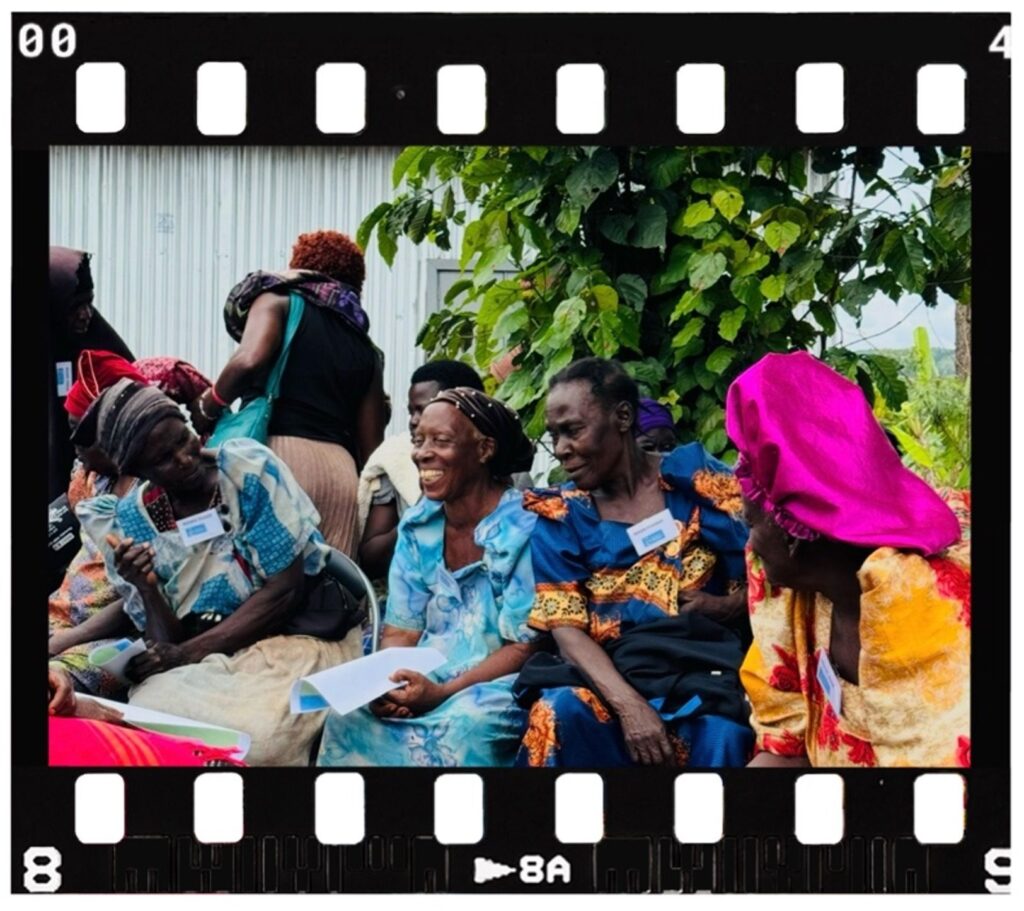
And yet some of the most meaningful health work I have witnessed recently is happening far from any clinic.
It is happening under trees.
Along village footpaths.
On household doorsteps.
And in conversations between nurses and grandmothers.
As part of the BAJJAJJA intervention, we are currently in the earliest phase of a five-year community-based program designed to support grandmother-caregivers in Uganda.
At first glance, it might not look like what many people expect health intervention to be.
There are no sophisticated exercise machines.
No state-of-the-art fitness facilities.
No expensive equipment.
Instead, there are registered nurses visiting grandmothers in their communities.
There are conversations.
There is encouragement.
There is coaching.
And there is a growing recognition that health can be built from the resources people already have.
Meeting People Where They Are
One of the guiding principles of this work is simple:
People should not have to wait until they reach a health facility to receive support for their health.
Instead, health support should meet people where they live.
The grandmothers participating in this program are not only caring for themselves. Many are also raising grandchildren, managing households, and navigating chronic health conditions.
Like many older adults around the world, they often carry significant responsibilities while receiving little support for their own well-being.
The health coaching component of BAJJAJJA seeks to change that.
Reimagining Physical Activity
One of the earliest lessons from this work-in-progress phase has been the importance of rethinking what physical activity actually looks like.
In place of gyms, treadmills or fitness memberships;
A water container becomes a weight.
A chair becomes a mobility training tool.
A tree provides support for balance exercises.
A village road becomes a walking track.
A daily chore becomes an opportunity for movement.
Rather than adding entirely new activities into already busy lives, the goal is to integrate health into routines that already exist.
This shift may seem small.
But it changes everything.
Because sustainable health behaviors are often the ones people can realistically maintain.
More Coaching, Less Telling
Perhaps the most powerful aspect of this intervention is not the physical activity itself.
It is the way we approach behavior change.
The nurses are not simply delivering instructions through ‘Health Education’
They are using health coaching tools such motivational interviewing—a conversation-based approach that helps individuals identify their own reasons for change.
Instead of saying:
“You need to exercise more.”
The conversation becomes:
“What type of movement feels possible for you right now?”
That difference matters.
When people identify their own goals, progress becomes something they own rather than something imposed upon them.
And ownership is often where lasting change begins.
The Reality of Implementation
Of course, none of this is easy.
Behavior change never is.
We are working in communities where resources are limited.
Health systems are stretched.
Daily responsibilities are demanding.
Fatigue is real.
Pain is real.
Competing priorities are real.
But perhaps that is precisely why this work matters.
The intervention is not designed for ideal conditions.
It is designed for real life. For an aging population.
And real life is where health ultimately happens.
What We Are Learning
Even in this early phase, several lessons are already emerging.
Health behaviors appear more sustainable when they are:
- Practical
- Meaningful
- Socially supported
- Contextually relevant
- Integrated into daily routines
People are more likely to continue behaviors that fit naturally within their lives than those that require dramatically changing them.
We are also seeing the importance of relationships.
Trust matters.
Encouragement matters.
Community matters.
Health is rarely an individual journey.
It is often a collective one.
Looking Ahead
Over the next two years, we hope to see movement evolve from being primarily nurse-supported to increasingly peer-led.
The vision is not dependence on a program.
The vision is ownership.
Grandmothers supporting one another.
Encouraging one another.
Leading one another.
And ultimately sharing what they learn with their families and communities.
That is where sustainability begins.
Why This Matters Beyond Uganda
Although this work is taking place in Uganda, the lesson is relevant far beyond Uganda.
Across Utah.
Across the United States.
Across communities around the world.
We continue to ask:
How do we help people live healthier lives?
Perhaps one answer is to stop thinking of health as something that begins in a healthcare facility.
And start thinking of health as something built through daily habits, relationships, confidence, and community support.
Final Takeaway
Health does not begin in clinics.
It begins in conversations.
It begins in movement.
It begins in community.
And it grows when people are empowered to make small, meaningful changes within the realities of their everyday lives.
Reflection Question
What daily activity in your own life could become an opportunity to invest in your health rather than simply complete a task?